
Blog
What skills are needed to work at a processing center?
Release Time:
2025-02-17 09:30
Source:


What skills are necessary for working on machining centers? Operating machining centers requires the following skills:
Knowledge of processes
Familiarity with the machining process: understanding the structure and technological characteristics of drilling, milling, boring, grinding, and planing machines; mastering the basic principles of various machining processes such as milling, drilling, boring, etc.; familiarity with the characteristics of the material being machined; selecting appropriate machining methods and process parameters according to material characteristics and processing requirements.
Understanding related work types: a general understanding of casting, electrical processing, heat treatment, and other related work types; familiarity with enterprise process specifications, guidelines, and various processes that can be achieved through processing the general technological route requirements of common parts; reasonable consumption of materials and working time quotas.
Programming skills
Mastery of programming language: learn the basic formats and functions of G-code and M-code; be able to write simple programs for machining operations; know the conversion relationships between the coordinate system and the workpiece coordinate system; master the basic principles of interpolative movement and programming methods, including linear interpolation, arc interpolation, etc.; and be able to write complex interpolative movement programs.
Using programming software: mastering the basic skills of working and drawing in CAD/CAM software, as well as using CAM software to convert CAD drawings into machining programs to improve programming efficiency and quality.
Operational skills
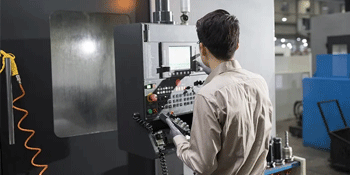
Machine operation: familiarity with the structure and operating principles of the machining center, including the role and characteristics of the spindle, feed axis, tool magazine, and other important components; mastering system operation, fixture installation, workpiece alignment, tool setting, zero offset setting, tool length compensation, radius compensation, tool and tool shank during loading, unloading, and other operations.
Manual control: manual tool change, manual tool adjustment, and other operations; using the control panel's manual handle or handwheel to control the movement of the machine axes to achieve precise machining positioning.
Measurement techniques
Use of measuring instruments: be able to use common measuring instruments such as vernier calipers, micrometer gauges, percentage tables, micrometers, lever internal diameter gauges, calipers, etc., to measure the dimensions, shape, and position of parts, and to ensure the accuracy of the dimensions and shape of the machined parts according to project requirements.
Measurement principles: master the operating principles and measurement methods of measuring instruments; understand the sources of errors and methods for controlling them; this is very important for improving machining accuracy, especially in CNC machining; error compensation technology can effectively reduce errors caused by equipment, tool wear, and other reasons.
Troubleshooting
Troubleshooting: familiar with CNC electrical components and control principles; can state the name and role of each component in the electrical box; can read electrical diagrams; according to the electrical alarm number, to find out the content of the alarm; to understand the common operating malfunctions (e.g., ultra-limit, tool magazine tool number incorrect, etc.) causes and solutions.
Emergency response: in the event of sudden malfunctions during processing, be able to quickly take emergency measures such as emergency shutdown, parameter adjustment, etc., to avoid the expansion of malfunctions and ensure the safety of personnel and equipment.
Knowledge of safety
Regulations: strictly observe the safety regulations for operating a machining center; wear necessary protective equipment such as safety glasses, protective gloves, earplugs, etc., to avoid flying chips, noise, and other bodily injuries.
Increased safety awareness: during programming and operation, ensure that each instruction in the program is checked to avoid safety hazards caused by programming errors; regularly check all parts of the machine to ensure that the equipment is in good working condition.
Corporate Blog
Industry Blog
Video
2025-02-17
What does the processing center do?
A machining center is a highly automated CNC machine.

Address: NPF «ECOLOGICAL SOLUTIONS AND TECHNOLOGIES», NPF ERiT, office address: Moscow, ul. Nametkina 14/1 Tel.:
IPV4 / IPV6