
Blog
What are the five main components of a data center?
Release Time:
2025-02-17 09:18
Source:


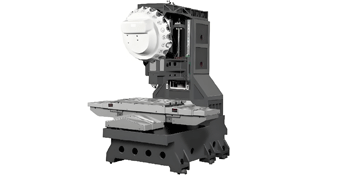
What are the five main components of machining centers? As the core equipment of modern manufacturing, the machining center directly affects production efficiency and product quality. When purchasing machining centers, users often focus on brand, price, and other obvious factors, but ignore the most basic components. In fact, the five main components of a machining center determine the overall performance and service life of the equipment. In this article, we will analyze these five components to help users make informed choices.
First, the spindle system: the heart of the machining center
The spindle system is the most basic component of a machining center, directly affecting the accuracy and efficiency of machining. A high-speed spindle uses advanced bearing technology and a cooling system, with speeds up to 20,000 rpm or more, to meet the needs of high-precision machining. A low-speed, high-torque spindle is suitable for machining heavy parts with stable and reliable torque.
When choosing a spindle system, it is necessary to consider the materials being processed, the technological requirements, and the production rhythm. For example, when processing aluminum alloy and other lightweight materials, a high-speed spindle can significantly improve processing efficiency; while when processing steel and other hard materials, a low-speed, high-torque spindle is more suitable.
Second, the feed system: a guarantee of accuracy
Ball screws and linear guides are key components of the feed system. The positioning accuracy of a high-precision ball screw can reach 0.003 mm, and the repeatability is 0.001 mm, meeting the requirements of precision machining. The linear guide ensures smooth and accurate movement of each axis.
The servo motor and drive system directly affect the dynamic characteristics of the feed system. A high-performance servo system allows for fast and accurate positioning and improves processing efficiency. When choosing, attention should be paid to the matching of the motor's torque, speed, and other parameters to the processing requirements.
Third, the CNC system: the core of intelligent control
The CNC system is the brain of the machining center. Main systems such as FANUC, SIEMENS, etc., have powerful functions and stability. When choosing, the openness of the system, scalability, and ease of use should be considered.
Software directly affects processing efficiency. Excellent software should have a user-friendly operator interface, powerful programming functions, and reliable simulation capabilities. Pay attention to the compatibility of the software and the CNC system. A user-friendly control interface design can improve work efficiency and reduce human error. Touch screens, shortcut keys, and other design elements are important factors.
Fourth, the tool magazine system: the key to efficiency
The capacity of the tool magazine and the tool change speed directly affect processing efficiency. The capacity of a disc-type tool magazine is usually 20-40, with a tool change time of 2-4 seconds; the capacity of a chain-type tool magazine reaches 120 or more, suitable for processing complex parts.
Tool recognition technology includes mechanical, radio frequency identification, and other methods, ensuring accurate and reliable tool changes. When choosing, consider the recognition accuracy and stability.
Fifth, the bed structure: a stable foundation
A high-quality cast iron bed has good damping and thermal stability, and can ensure machining accuracy. A welded steel structure bed has increased rigidity and is suitable for heavy cutting.
A well-designed structure can increase the rigidity of the machine and reduce vibration and deformation. Pay close attention to the location of the machine's ribs and wall thickness.
The five main components of a machining center interact with each other and together determine the overall performance of the equipment. When purchasing, users should thoroughly study the characteristics and operating parameters of each component and make a choice according to their actual processing needs. At the same time, attention should be paid to regular maintenance to ensure the long-term stable operation of the equipment. Choose only the right core components to truly achieve the value of the machining center and create greater benefits for the enterprise.
Corporate Blog
Industry Blog
Video
2025-02-17
What does the processing center do?
A machining center is a highly automated CNC machine.

Address: NPF «ECOLOGICAL SOLUTIONS AND TECHNOLOGIES», NPF ERiT, office address: Moscow, ul. Nametkina 14/1 Tel.:
IPV4 / IPV6